Introduction
Welding, brazing, and soldering are essential metal joining processes used across manufacturing, construction, automotive, shipbuilding, mining, and industrial fabrication sectors. Each method has its own advantages based on temperature, material type, strength requirement, and production environment.
This guide explains the key differences, applications, and industrial importance of these processes, including MIG/MAG welding, TIG (Argon) welding, plasma cutting, and brazing technologies.
1. Welding vs Brazing vs Soldering – Key Differences
Welding
Welding is a process where two metals are joined by melting the base materials together, often with filler metal, creating a strong permanent joint.
- Very high temperature process
- Base metal melts
- Strongest type of joint
- Used in structural and industrial applications
Brazing
Brazing joins metals using a filler metal that melts at a lower temperature than the base metals.
- Base metal does NOT melt
- Filler flows by capillary action
- Stronger than soldering
- Suitable for dissimilar metals
Soldering
Soldering is a low-temperature joining process mainly used for light-duty applications.
- Lowest temperature process
- Weakest joint strength
- Used in electronics and light metal work
2. Brazing Process Explained
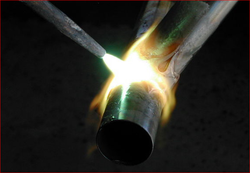
Brazing uses a filler metal heated above its melting point while the base metals remain solid. The molten filler flows into the joint and solidifies to create a strong bond.
Advantages of Brazing
- Low distortion of base metal
- Suitable for thin materials
- Excellent for joining dissimilar metals
- Clean and smooth finish
Applications
- HVAC systems
- Bicycle frames
- Automotive components
- Electrical and plumbing systems
3. Soldering Process Overview
Soldering joins metals using a filler alloy that melts below 400°C.
Key Features
- Low heat requirement
- Electrical conductivity applications
- Easy and cost-effective process
Applications
- Electronic circuits
- Small metal joints
- Electrical wiring systems
4. MIG/MAG Welding (GMAW)
MIG/MAG welding is a gas-shielded arc welding process using a continuous wire electrode.
How it Works
- Wire electrode feeds continuously
- Electric arc melts wire and base metal
- Shielding gas protects weld pool
Shielding Gases
- Argon (clean welds)
- CO₂ (deep penetration)
- Gas mixtures for optimized performance
Applications
- Automotive industry
- Structural fabrication
- Heavy manufacturing
5. TIG (Argon) Welding
TIG welding uses a non-consumable tungsten electrode with inert gas shielding (usually Argon).
Key Features
- High precision welding
- Clean and high-quality welds
- Suitable for thin and critical materials
Materials
- Stainless steel
- Aluminium
- Copper
- Titanium
Applications
- Aerospace
- Pipe welding
- Precision fabrication
6. Plasma Cutting Technology
Plasma cutting uses a high-temperature ionized gas to cut metals with precision.
Advantages
- Fast cutting speed
- High accuracy
- Works on thick materials
Applications
- Metal fabrication
- Shipyards
- Industrial cutting operations
7. Industrial Welding Systems (TELWIN & Global Brands)
Modern welding systems are designed for efficiency, safety, and automation.
Key Features
- Inverter technology
- Synergic control systems
- Multi-process machines (MIG/TIG/MMA)
- Energy efficiency
- Advanced safety protection systems
Industrial Benefits
- Higher productivity
- Lower operational cost
- Stable arc performance
- Long-term reliability
8. Applications Across Industries
- Construction & Steel Fabrication
- Automotive Manufacturing
- Oil & Gas Industry
- Shipbuilding & Marine Engineering
- Mining & Heavy Equipment
- Aerospace & Precision Engineering
9. Advantages of Modern Welding Technology
- Improved weld quality
- Reduced material waste
- Automation compatibility
- High-speed production
- Safer working conditions
Conclusion
Welding, brazing, and soldering are fundamental technologies in modern manufacturing. Among them, welding remains the strongest and most widely used process, while brazing and soldering serve specialized applications.
With advanced systems like MIG/MAG, TIG Argon welding, and plasma cutting machines, industries can achieve higher efficiency, precision, and durability in metal fabrication.